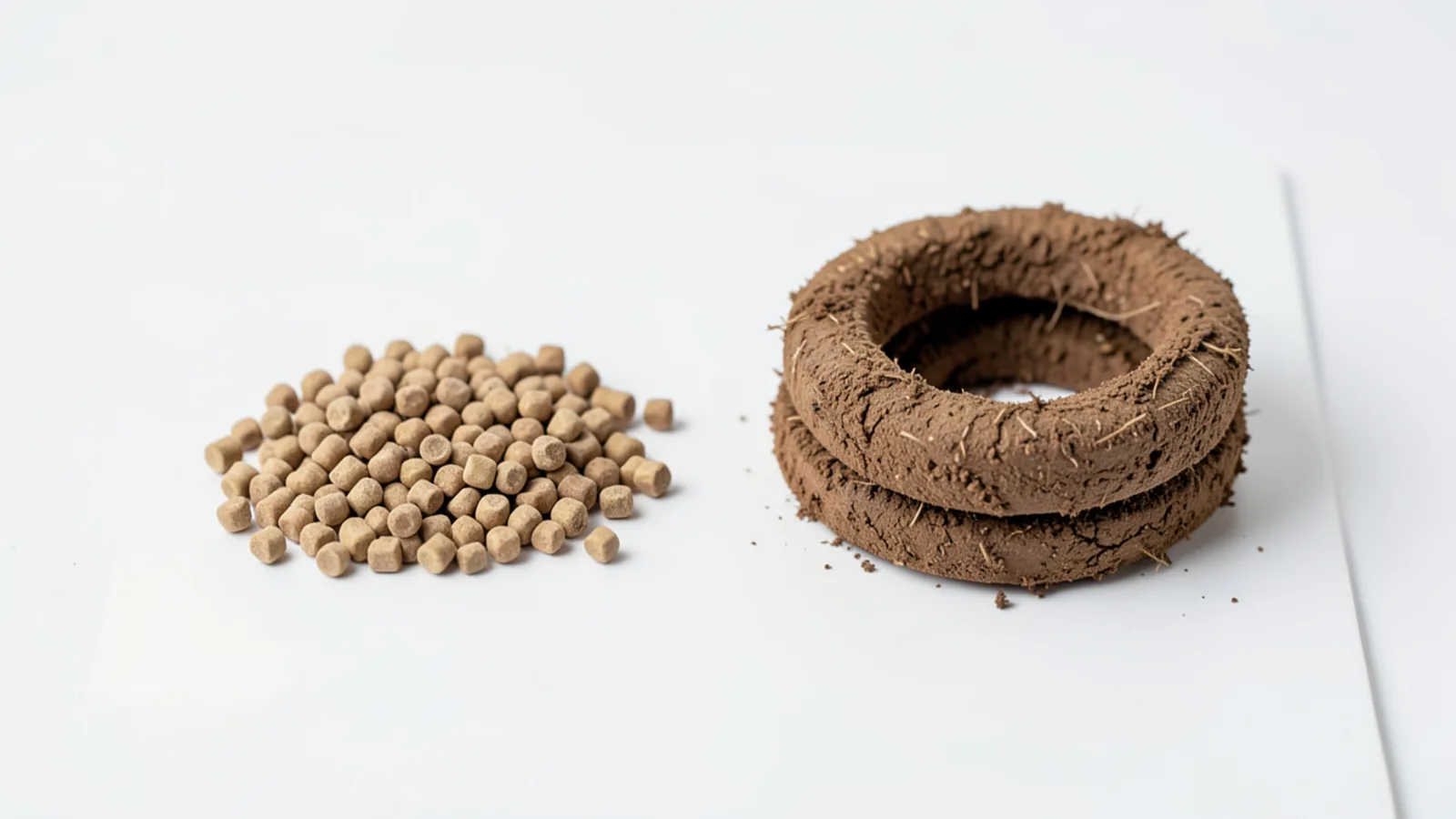
Subterranean termites live underground and build earthen mud tubes to feed on structural framing, requiring liquid soil barriers or in-ground bait stations. Drywood termites live entirely inside dry structural timber, producing distinctive sand-like fecal pellets (frass), and typically require whole-home tent fumigation or localized borate injections. Applying soil chemicals for drywoods or tenting for subterranean termites will fail to resolve the problem.
- 01.Key Biological Differences: Colony Location, Colony Size, and Moisture
- 02.Diagnostic Signs: Mud Shelter Tubes vs Fecal Frass Pellets
- 03.Structural Damage Patterns in Florida Slab-on-Grade Homes
- 04.Florida Contractor Insight: Why Whole-Home Tenting Won’t Stop Subterranean Termites
- 05.Geographical Risk Profiles: Waterfront vs Inland South Hillsborough
- 06.Contract Terms, Re-Inspection Bonds, and Florida Chapter 482 Warranties
Key Biological Differences: Colony Location, Colony Size, and Moisture
Understanding which termite species is infesting your Tampa Bay home is the single most critical factor in selecting an effective treatment. Misidentifying the species leads to wasted investments on treatments that leave the active colony completely unharmed.
Subterranean termites (*Reticulitermes* species and invasive *Coptotermes formosanus*) require constant contact with moist soil to survive. They nest in ground colonies that can house anywhere from several hundred thousand to over one million individual workers. Because their soft, unpigmented bodies desiccate rapidly in dry air, they must travel into human structures through protective earthen mud shelter tubes constructed from soil, saliva, and digested wood pulp.
Drywood termites (*Cryptotermes cavifrons* and *Incisitermes snyderi*), by contrast, require zero soil contact and zero connection to the ground. They extract metabolic moisture directly from ambient atmospheric humidity and the structural cellulose they digest. A drywood colony lives entirely sealed inside the wooden member it is consuming—such as a roof truss, door header, window sill, or hardwood furniture piece. Colony sizes are much smaller, rarely exceeding 3,000 to 5,000 individuals per isolated nest, though a mature house can harbor multiple independent colonies simultaneously.
These fundamental biological contrasts explain why a single extermination strategy cannot solve both problems. Soil termiticides never touch drywood termites in attic rafters, while tent fumigation gas dissipates completely into the atmosphere and never penetrates subterranean soil to reach subterranean queens.
Found Frass Pellets or Earthen Mud Tubes in Your Home?
Connect with a qualified independent wood-destroying organism specialist serving South Hillsborough County today.
Diagnostic Signs: Mud Shelter Tubes vs Fecal Frass Pellets
Because termites remain concealed inside structural members, homeowners rarely encounter live worker insects until severe structural damage has occurred. Fortunately, the secondary evidence left by these two species is completely distinct.
Subterranean termites construct visible earthen mud shelter tubes along concrete stem walls, foundation footings, crawlspace piers, and drywall surfaces. Inside structural wood, subterranean workers consume only the softer springwood cellulose, leaving the harder summerwood growth rings intact. This feeding pattern creates a characteristic layered, honeycombed wood gallery packed with dark, muddy fecal soil plaster.
Drywood termites do not build mud tubes and never introduce soil into structures. Instead, they excavate clean, smooth galleries across all wood grains without distinction. To keep their internal nesting tunnels clean, drywood nymphs bore microscopic "kick-out holes" (roughly one millimeter wide) through the surface of the wood. Through these holes, they push out dry fecal pellets called frass.
Drywood frass resembles coarse beach sand or ground black pepper. Under magnification, each individual frass pellet exhibits an elongated oval shape with six distinct concave fluted sides and rounded ends. Finding small conical piles of hard, dry pellets beneath a windowsill, doorframe, or baseboard is conclusive proof of an active drywood termite infestation.
| Diagnostic Sign | Subterranean Termites | Drywood Termites |
|---|---|---|
| Primary Physical Evidence | Earthen mud shelter tubes running up concrete stem walls | Dry, sand-like six-sided fecal pellets (frass) under kick-out holes |
| Feeding Morphology | Consumes soft springwood, leaving layered wood rings filled with soil | Excavates smooth, clean galleries across all wood grains without soil |
| Colony Habitat | Subterranean soil matrix below or adjacent to foundation | Entirely enclosed inside dry structural timbers and rafters |
| Colony Population | 200,000 to over 1,000,000 workers per colony | 1,000 to 5,000 individuals per localized nest |
| Swarmer Flight Schedule | Spring daytime (subterranean) or late spring dusk (Formosan) | Summer and fall evenings around interior window lights |
| Primary Eradication Method | Continuous perimeter liquid soil barrier or in-ground bait stations | Whole-structure sulfuryl fluoride tent fumigation or localized borate injection |
Structural Damage Patterns in Florida Slab-on-Grade Homes
In South Hillsborough communities like Ruskin, Sun City Center, and Riverview, the vast majority of residential homes are constructed on monolithic slab-on-grade foundations. Concrete slab architecture creates distinct entry points for both termite families.
Subterranean termites exploit invisible shrinkage cracks in the concrete slab, expansion joints between the garage slab and living areas, and plumbing penetrations beneath bathtubs and showers. When plumbing lines were stubbed through the slab during construction, wooden form boxes were frequently abandoned beneath shower traps, providing an immediate subterranean food and moisture reservoir.
Drywood termites enter structures from the top down. Winged alates land directly on exterior rooflines, crawling under concrete barrel tiles, penetrating unscreened attic soffit vents, and colonizing exposed rafter tails or fascia boards. Once inside the attic, drywood swarmers bore directly into truss members, ceiling joists, and roof decking without ever descending to the foundation level.
Over time, subterranean termites cause structural settlement and sagging drywall as load-bearing wall studs lose internal mass. Drywood termites cause localized structural failure in roof truss joints, cracked window jambs, and hollowed architectural crown moldings.
Florida Contractor Insight: Why Whole-Home Tenting Won’t Stop Subterranean Termites
One of the most persistent misconceptions among Tampa Bay homeowners is that whole-house tent fumigation solves all termite problems simultaneously. Understanding fumigant chemistry and pest ecology clarifies why this belief is dangerously incorrect.
Whole-structure tent fumigation utilizes sulfuryl fluoride (Vikane), a true non-persistent gas that penetrates porous building materials like pine studs, drywall, and hardwood flooring under sealed vinyl tarps. The gas achieves a lethal concentration inside structural timbers, killing 100% of exposed drywood termites, wood-boring beetles, and bed bugs.
However, sulfuryl fluoride does not bind to wood fibers and leaves zero residual chemical protection. Once the tarps are removed and aeration fans clear the building, the gas disperses into the upper atmosphere. Crucially, the gas cannot penetrate dense, moist subterranean soil. If subterranean termites are nesting below your slab, the workers and queen remain completely unharmed underground, ready to resume feeding on structural framing the very next day.
Conversely, treating the soil with liquid barrier termiticides or installing perimeter bait stations will never kill drywood termites living in your attic trusses. Drywood termites never leave their wooden rafters to enter the yard, meaning they will never encounter soil-applied termiticides.
Independent pest contractors therefore conduct rigorous diagnostic inspections before recommending treatment. If a home harbors both species simultaneously, a combination approach—such as tent fumigation for superstructure drywoods followed by perimeter bait station installation for subterranean defense—is required.
Geographical Risk Profiles: Waterfront vs Inland South Hillsborough
Pest pressure across South Hillsborough County is not uniform. The local microclimate, proximity to saltwater canals, and land-use history strongly dictate termite vulnerability.
Coastal and canal-front communities like Apollo Beach, Ruskin waterfront, Palmetto, and Bradenton face intense drywood termite pressure. Warm sea breezes carrying humid air from Tampa Bay facilitate long-distance dispersal flights for drywood alates. Furthermore, pressure-treated marine pilings, unpainted dock structures, and wooden boat lifts serve as perpetual outdoor breeding reservoirs.
Inland subdivisions across Riverview, Wimauma, Brandon, and Plant City experience higher subterranean termite pressure. Many of these modern master-planned communities were developed on former citrus groves, dairy pastures, and pine scrublands. Saturated soil water tables, decaying subterranean root systems, and organic landscaping mulch create ideal subterranean nesting grounds.
Contract Terms, Re-Inspection Bonds, and Florida Chapter 482 Warranties
Hiring an independent pest contractor to resolve a termite infestation in Florida involves entering into a regulated service agreement governed by Chapter 482 of the Florida Statutes and Rule 5E-14 of the Florida Administrative Code.
Homeowners must verify whether a proposed contract is a "Retreatment Only" warranty or a "Retreatment and Repair" bond. A retreatment-only contract guarantees that the operator will reapply chemicals or replace bait matrixes if termites return, but places the financial burden of repairing damaged wood squarely on the property owner.
A retreatment-and-repair bond covers structural timber replacement costs up to a specified dollar limit (often $250,000 to $1,000,000) if live subterranean termites breach the treated barrier and cause new structural damage. Most contractors require an annual re-inspection fee ($150 to $350) to maintain bond validity.
Always demand that the written contract explicitly lists the chemical brand name, EPA registration number, total gallons applied or bait station count, and a detailed structural graph indicating all treated zones.
Tampa Bay Drywood vs Subterranean Termite Questions & Answers
No. Sulfuryl fluoride fumigation gas only penetrates the enclosed air space and wood framing inside the tarps. It does not penetrate deep subterranean soil where subterranean termite colonies and queens reside.
- Differentiating Drywood and Subterranean Termites — University of Florida IFAS Extension
- Termite Treatment Industry Guidelines — National Pest Management Association