
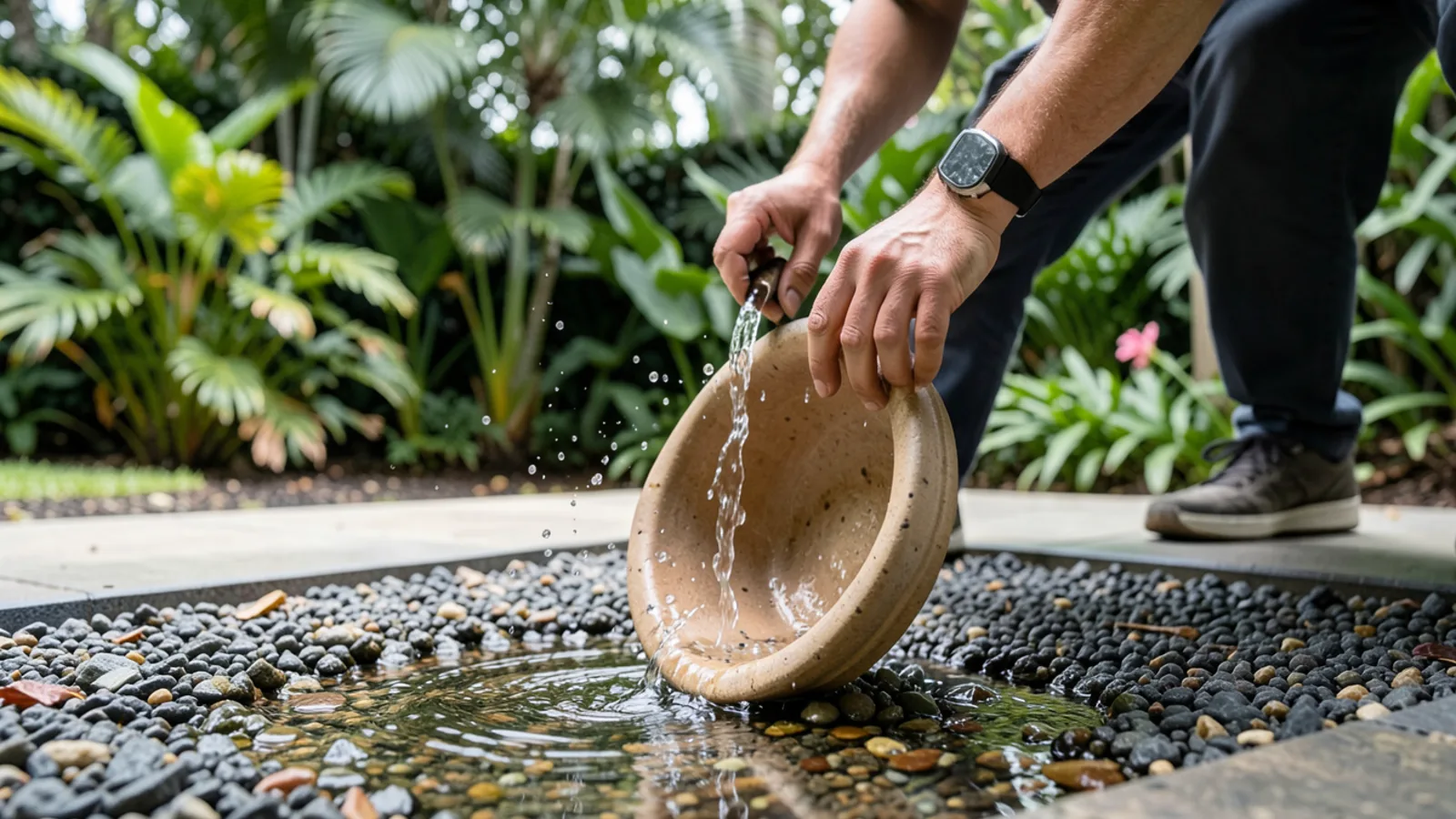
Mosquito season in South Hillsborough peaks from April through October when temperatures exceed 80°F and daily afternoon rains create standing water. Effective control relies on eliminating standing water sources within 5 days of rainfall, maintaining clean gutters, treating birdbaths with biological BTI briquets, and applying targeted perimeter vegetation barrier sprays. Call (321) 496-4080 to schedule professional yard misting.
- 01.The SouthShore Mosquito Timeline: March Through November
- 02.Key Tampa Bay Mosquito Species: Asian Tiger vs Salt-Marsh vs House Mosquitoes
- 03.Top 10 Hidden Breeding Sites in Florida Backyards
- 04.The 5-Day Post-Rain Yard Inspection Routine
- 05.Biological BTI Larvicides vs Professional Perimeter Barrier Misting
- 06.Florida Contractor Insight: Why Bug Zappers, Bats, and Citronella Fail
The SouthShore Mosquito Timeline: March Through November
While mosquitoes can bite on warm winter afternoons throughout Florida, peak breeding season in South Hillsborough County begins in late March as ambient daily temperatures consistently cross 80°F. The season reaches maximum reproductive intensity during the summer rainy period from June through September, tapering off only when dry cold fronts arrive in late November.
South Hillsborough County features an exceptional abundance of mosquito-breeding environments. Mangrove wetland fringes along Tampa Bay, tidal saltwater canals in Apollo Beach and Ruskin, retention swales in Riverview, and agricultural drainage canals in Wimauma generate massive mosquito populations that drift into residential neighborhoods on afternoon breezes.
Can’t Enjoy Your Patio or Lanai Due to Mosquito Swarms?
Connect with an independent mosquito control specialist serving Ruskin, Apollo Beach, and Riverview.
Key Tampa Bay Mosquito Species: Asian Tiger vs Salt-Marsh vs House Mosquitoes
Not all mosquitoes biting in your backyard belong to the same species. Understanding their biology helps target control measures effectively.
The Asian Tiger Mosquito (*Aedes albopictus*) is a daytime biter with distinct black-and-white striped legs. They rarely travel more than 300 to 500 feet from where they hatch, breeding almost exclusively in artificial residential containers like flower pots, discarded toys, and birdbaths.
The Black Salt-Marsh Mosquito (*Aedes taeniorhynchus*) breeds in coastal mangrove mudflats and tidal marsh ditches. They are powerful fliers capable of traveling up to 10 to 20 miles inland, producing aggressive biting swarms across Apollo Beach, Ruskin, and Gibsonton following monthly full-moon high tides.
The Southern House Mosquito (*Culex quinquefasciatus*) is a dusk-to-dawn biter that prefers stagnant, nutrient-rich water in stormwater drains and septic swales. *Culex* mosquitoes serve as primary vectors for West Nile virus and St. Louis encephalitis in Hillsborough County.
Top 10 Hidden Breeding Sites in Florida Backyards
Female mosquitoes require only a thimble-full of standing water to lay rafts of 100 to 300 eggs. Inspecting these common residential breeding locations interrupts reproduction:
The 5-Day Post-Rain Yard Inspection Routine
Under Florida 90-degree summer heat, the mosquito biological life cycle accelerates dramatically. A mosquito egg can hatch into an aquatic larva, develop into a pupa, and emerge as a flying adult biter in as few as 5 to 7 days.
Establishing a disciplined "Tip and Toss" routine every five days following a thunderstorm is the single most effective cultural control method available to homeowners. Walk the entire property perimeter, tipping over saucers, clearing downspout lines, and shaking water out of tarps.
For water features that cannot be drained—such as ornamental ponds, bromeliad gardens, and French drain basins—apply biological BTI (*Bacillus thuringiensis israelensis*) briquets or granular granules.
Biological BTI Larvicides vs Professional Perimeter Barrier Misting
Integrated Pest Management (IPM) for mosquitoes combines larval source reduction with targeted adult barrier treatments.
Biological BTI larvicides contain a naturally occurring soil bacterium that produces crystal proteins toxic exclusively to the digestive systems of mosquito, blackfly, and midge larvae. BTI has zero toxicity to mammals, birds, fish, honeybees, and pets. Dropping a BTI dunk into an ornamental pond prevents larvae from maturing into adults for 30 consecutive days.
Professional Adulticide Barrier Treatments involve applying micro-encapsulated residual pyrethroids to the undersides of dense foliage, ornamental palms, and shaded perimeter shrubbery. Because adult mosquitoes cannot tolerate direct sunlight and dehydration, they rest in dense shrubbery during the heat of the day. Contacting the treated foliage knocks them down on contact, providing up to 21 to 30 days of continuous yard protection.
Florida Contractor Insight: Why Bug Zappers, Bats, and Citronella Fail
Homeowners spend thousands of dollars annually on retail gimmicks that fail to reduce biting mosquito populations. Understanding the science behind these products prevents wasted investments.
Ultraviolet Bug Zappers: Multiple independent entomological studies by the University of Florida have shown that electric bug zappers kill almost exclusively non-target beneficial insects, harmless midges, and night-flying moths. Mosquitoes—which hunt by sensing carbon dioxide, body heat, and lactic acid—comprise less than 1.5% of insects killed by zappers.
Bat Houses: While bats consume insects, dietary analysis reveals that wild bats feed primarily on large beetles, moths, and agricultural pests rather than tiny mosquitoes that offer little nutritional payoff per capture.
Citronella Candles: Citronella oil only repels mosquitoes if the insect flies directly through the rising smoke plume. In open patio air where Florida breezes disperse the smoke, mosquitoes bite unimpeded just inches away from the candle flame.
Effective outdoor protection requires systematic source reduction combined with professional targeted foliage barrier misting. For personal outdoor protection during evening hours on the SouthShore, the CDC and EPA recommend topical repellents containing active concentrations of DEET (20% to 30%), Picaridin, or Oil of Lemon Eucalyptus (OLE), which disrupt the insect’s olfactory antennae receptors and provide proven bite prevention.
SouthShore Mosquito Control Questions & Answers
No. University entomological studies have proven that ultraviolet bug zappers kill primarily beneficial insects and moths, with mosquitoes comprising less than 2% of the catch. Bats consume primarily moths and beetles rather than significant numbers of mosquitoes.
- Mosquito Management Around the Home — University of Florida IFAS Extension
- Mosquito Prevention Tips — Hillsborough County Mosquito Management