
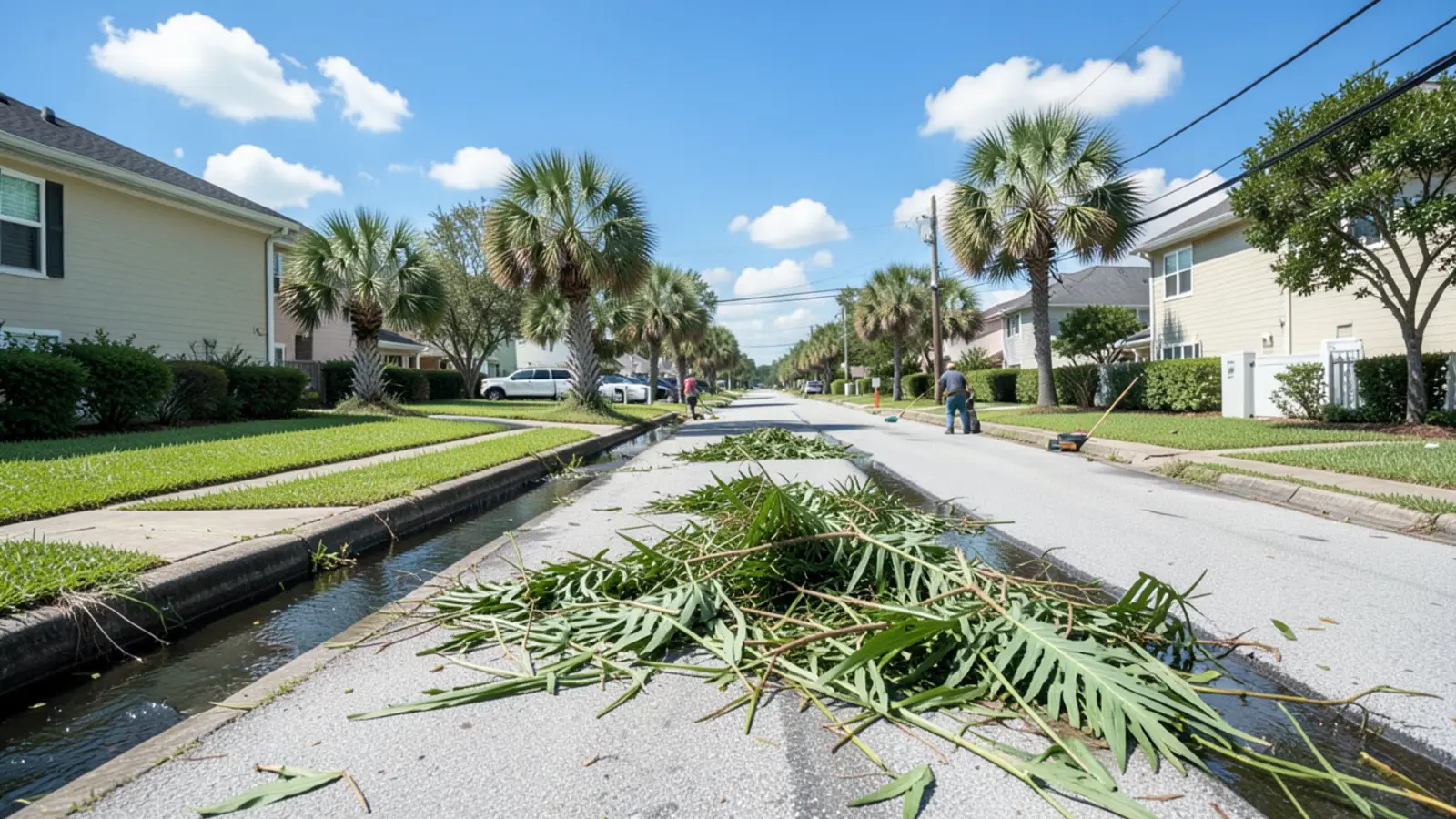
Hurricane storm surges and heavy inland flooding across Hillsborough County displace ground-dwelling pests into elevated living areas. Property owners face immediate roof rat attic migrations, sewer cockroach influxes through plumbing lines, and mosquito population explosions within 7–14 days in standing floodwaters. Protective measures include immediate water drainage, sealing utility line penetrations, and professional structural inspections. Call (321) 496-4080 for post-storm help.
- 01.Why Severe Tropical Cyclones and Heavy Flooding Drive Pests Indoors
- 02.The 7-to-14 Day Post-Storm Mosquito Explosion
- 03.Municipal Sewer Inundation and Roach Backflow Through Plumbing
- 04.Storm-Damaged Rooflines as Rodent and Wildlife Superhighways
- 05.Moisture Intrusion and Post-Disaster Subterranean Termite Acceleration
- 06.Florida Contractor Insight: Post-Storm Consumer Protection and Contractor Scams
Why Severe Tropical Cyclones and Heavy Flooding Drive Pests Indoors
Tampa Bay and South Hillsborough County are uniquely vulnerable to tropical cyclones, subtropical depressions, and intense summer squalls that generate heavy rainfall and coastal storm surges. When water levels rise along the Little Manatee River, the Alafia River, and coastal canal networks in Ruskin and Apollo Beach, ground-dwelling wildlife and subterranean insect colonies lose their underground habitats within hours.
Subterranean species—including fire ants, field mice, Norway rats, and burrowing beetles—face immediate drowning in saturated soils. Their evolutionary survival instinct compels them to seek immediate high ground. For millions of displaced pests, residential concrete slab homes, attached garages, elevated wood porches, and dry attic cavities offer safe, elevated sanctuaries above floodwaters.
Additionally, floodwaters carry organic debris, fallen tree limbs, and municipal waste against exterior foundation walls. This debris creates moist, protected organic bridges that bypass existing chemical soil barriers, allowing insects and rodents to walk directly into weep holes, sliding glass door tracks, and unsealed siding joints.
Dealing With Displaced Rodents or Insects After a Storm?
Connect with an independent pest contractor who understands post-flood structural sanitization and perimeter barrier restoration.
The 7-to-14 Day Post-Storm Mosquito Explosion
While adult mosquitoes are temporarily suppressed by hurricane-force winds during the storm itself, the aftermath creates an unprecedented reproductive explosion. Heavy rains fill drainage ditches, roadside swales, overturned boats, storm tarps, and clogged roof gutters across Ruskin, Gibsonton, and Riverview.
Under Florida summer heat, two distinct mosquito groups emerge. First, "floodwater mosquitoes" (*Psorophora ciliata* and *Aedes vexans*), whose dormant eggs were deposited in dry soil months prior, hatch en masse within hours of soil inundation. These large, aggressive biters emerge as flying adults in as few as five to seven days.
Second, container-breeding species such as the Asian tiger mosquito (*Aedes albopictus*) and the southern house mosquito (*Culex quinquefasciatus*) colonize debris piles, tire ruts, and flooded recycling bins. Beyond causing severe outdoor nuisance biting, *Culex* mosquitoes serve as primary vectors for West Nile virus and Eastern equine encephalitis (EEE). Homeowners must prioritize "tip-and-toss" source reduction within 5 days of rainfall to interrupt larval pupation.
Municipal Sewer Inundation and Roach Backflow Through Plumbing
During extreme precipitation events, municipal stormwater systems and underground sanitary sewer lines become completely overwhelmed by stormwater infiltration. American cockroaches (commonly called palmetto bugs), which thrive by the thousands inside municipal manholes, storm culverts, and sewer mains, are driven upward by rising subterranean water levels.
As sewer lines flood, cockroaches navigate up residential lateral sewer pipes. Under normal conditions, water trapped inside bathroom fixture P-traps provides an airtight liquid seal preventing sewer gas and insect intrusion. However, in vacant guest bathrooms, utility sinks, or floor drains where P-traps have dried out, sewer roaches crawl directly out of sink drains, bathtub overflow holes, and shower drains.
To prevent sewer roach entry following tropical storms, homeowners should immediately pour two cups of clean water into every drain in the home (including rarely used guest bath fixtures and washing machine standpipes) to re-establish the liquid water barrier, and keep drain stoppers sealed securely when not in use.
Storm-Damaged Rooflines as Rodent and Wildlife Superhighways
Tropical storm-force winds regularly snap live oak branches, tear off palm fronds, and dislodge asphalt roof shingles. Heavy limbs falling across roofs puncture plywood decking, crack fascia boards, and rip open aluminum soffit vents.
Roof rats (*Rattus rattus*) exploit this physical damage immediately. Saturated ground conditions force outdoor rat populations out of mulch beds and canal banks. Using fallen branches and dangling utility wires as ramps, rats climb directly onto damaged rooflines and enter warm, dry attic spaces.
Once inside, rodents tear apart wet fiberglass insulation to construct nesting burrows, contaminating attic spaces with urine and droppings. In their search for nesting material and food, they chew through electrical wiring and plastic AC condensate lines, creating hidden fire and water hazards inside ceiling assemblies.
Moisture Intrusion and Post-Disaster Subterranean Termite Acceleration
Hurricanes frequently cause subtle wind-driven rain penetration behind stucco walls, around window caulking, and through roof valley flashing. In monolithic slab homes, this moisture becomes trapped inside exterior wall framing cavities without visible interior drywall staining.
Subterranean termites require continuous wood moisture content above 20% to feed actively. Damp wall framing provides an ideal microclimate. Subterranean worker termites nesting beneath the slab detect moisture gradients and accelerate tunneling through slab expansion joints into water-damaged wall framing.
In severe cases, Formosan subterranean termites (*Coptotermes formosanus*) can establish aerial "carton" nests directly inside moisture-soaked wall cavities without maintaining ground contact, relying entirely on persistent roof leaks for moisture. Having an independent contractor conduct electronic moisture meter testing following major storm repairs is crucial.
Florida Contractor Insight: Post-Storm Consumer Protection and Contractor Scams
In the wake of major hurricanes, unscrupulous out-of-state operators and unlicensed individuals flood into impacted Florida communities offering rapid pest clean-outs, tree trimming, and roof sealing for cash.
Under Florida Statute Chapter 482, applying commercial pesticides or performing structural wood-destroying organism treatments requires active business registration with the Florida Department of Agriculture and Consumer Services (FDACS). Unlicensed operators frequently apply illegal or misbranded chemicals that contaminate storm runoff or fail to eradicate target pests.
Always demand proof of active FDACS registration and a qualified operator card before allowing any individual to treat your home. Legitimate independent contractors provide written service agreements detailing product names, EPA registration numbers, and warranty terms.
Additionally, property owners should coordinate with municipal vegetative debris collection programs. In Hillsborough County, curbside storm debris must be separated into vegetative piles, construction materials, and hazardous items. Keeping rotting organic debris piles at least ten feet away from foundation walls prevents subterranean pests from using yard waste as staging grounds while awaiting municipal pickup.
Post-Hurricane Hillsborough Pest Questions & Answers
Mosquito populations typically explode 7 to 14 days after severe storm flooding. Stagnant floodwater pockets provide ideal breeding conditions once adult mosquitoes begin emerging from newly laid eggs.
- Vector Control in Disaster Response — FEMA Emergency Management Institute
- Post-Storm Pest Precautions — Florida Department of Health in Hillsborough County